What is the Use of Technology in Education?
Today’s educational latest technology serves a variety of purposes, improving learning, teaching, and administrative processes. First, it expands access to education through online learning platforms, enabling students to access educational materials anytime, anywhere, and facilitating distance learning.
This accessibility is especially beneficial for non-traditional students, students with busy schedules, or those living in remote areas.
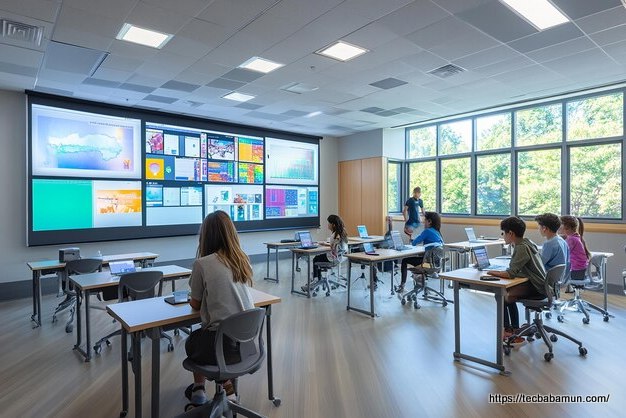
Second, latest technology-enriched learning experiences and interactivity provide increased engagement. Interactive whiteboards, educational apps, and virtual simulations make learning more dynamic and enjoyable, catering to different learning styles and preferences.
This increased engagement results in improved retention and understanding of complex concepts. Further more, technology has made it possible to create personalized learning experiences according to the individual needs and abilities of the student.
Adaptive learning systems use data analytics to track student progress and provide interventions to achieve individual goals, ensuring that every student receives the support they need to succeed.
Additionally, technology facilitates collaboration between students and teachers, overcoming geographical barriers.
Virtual classrooms, discussion forums, and collaborative documents enable meaningful interaction and knowledge sharing, fostering a sense of community and global connection.
Further more, latest technology simplifies administrative tasks like attendance tracking, grading, and course management, improving efficiency and freeing up time for teachers to focus on teaching.
Overall, when looking at technology in the classroom, the examples show how technology democratizes education, making it more accessible, engaging, and efficient.
Through the effective use of latest technology, teachers can create dynamic learning environments that enable students to reach their full potential, preparing them for success in the digital age.
What is the Definition of Educational Technology?
Educational technology, sometimes called instructional technology, refers to the use of digital tools, systems, and resources to improve teaching, learning, and educational management.
It included a wide range of technologies, software, hardware and internet-based, designed to help teachers and students improve the educational experience.
The main goal of educational latest technology is to make learning efficient, engaging, personalized, and accessible.
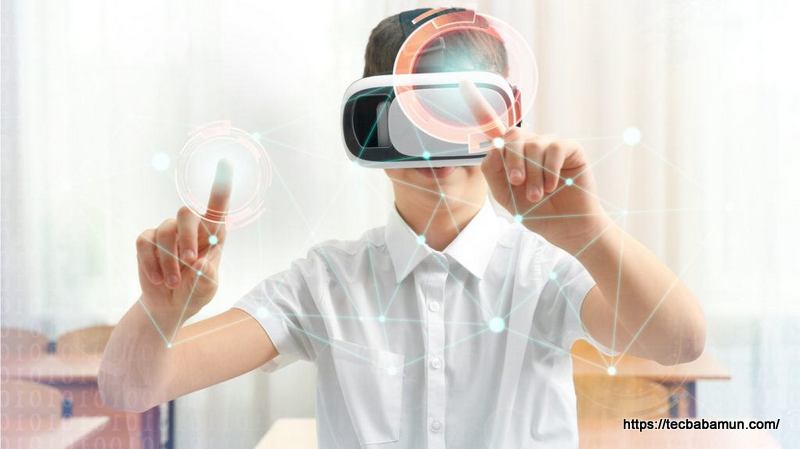
Educational technology includes a variety of tools such as interactive whiteboards, learning management systems (LMS), educational apps, virtual reality (VR), and artificial intelligence (AI) – powered by adaptive-to-learn programs.
These tools enable teachers to create dynamic and interactive lessons that adapt to different learning styles, making instruction more flexible and responsive to the individual needs of the student.
The ability to support personalized learning is an important aspect of educational latest technology. Through data analytics or adaptive technology, student performance can be monitored and customized content can be provided, enabling students to progress at their own pace.
This unique approach promotes better engagement and understanding, which provides a more relevant educational experience.
Education latest technology extends learning beyond the traditional classroom. Through online courses, virtual classrooms, or learning mobile apps, more educational opportunities are created for students in remote or underserved areas.
In addition to educational support, administrative work educational technology simplifies grading choices, tracking attendance, or communication, improving school management efficiency.
Overall, the transformative force in modern education represents the reconstruction, use, and management of knowledge through educational latest technology, knowledge distribution.
Using New Technologies in Education
Latest technology in education is part of the natural evolution, the use of new teaching methods. Some time ago, this meant buying computers for the school, but nowadays, it means much more than that.
The latest Technology innovation plays a significant role in teaching. Most modern classroom equipment has reminded older readers of the days when projectors and videotapes were used.
Since 2000, modern information latest technology has begun to be introduced. If once these were considered a competitive advantage, nowadays they are essential for the education business.
The pandemic has further strengthened the need for these types of tools, as they provide remote learning and other resources for students, instructors, and institutions.
Support for Teaching and Learning:
Most schools interviewed had decided to use VLE [Virtual Learning Environment], devices or website subscriptions to support teaching and learning across the school (in class and remotely).
They have made significant investments in the education sector, including technological equipment, including interactive whiteboards, laptops or tablets for students and staff, and in some cases visualizers.
Edtech has been used to reduce teachers’ workload by automating marking, moderation, and inputting some school assessment tasks.
These included systems specifically designed for assessment purposes, while others used more informal methods such as embedding quizzes and tests using existing VLEs or specific services.
Several schools have used EdTech to support SEND [Special Educational Needs and Disabilities] students or those with language impairments.
This includes the use of tools designed to assess student needs and adaptive latest technology to improve engagement with the broader curriculum.
Datafication And Learning Analytics
Datafication is a truly huge trend in education. Its main goal is to transform various aspects of learning into measurable data, which is then analyzed to gain insights into student performance, engagement, and learning patterns.
This is facilitated through learning analytics, educational experiences that predict outcomes, and suitability.
Personalized learning is one of the most important aspects of learning analytics.By delving deeper into the data on how students engage with content, teachers can tailor their teaching to individual needs, help struggling students, challenge high-performers, and address curriculum gaps.
Artificial Intelligence (AI)
The role of artificial intelligence (AI) in education is being debated. Many teachers are much more optimistic about using AI, while less than 20% of teachers feel ready to use AI tools.
Teachers need professional development and training on GenAI to experience the potential benefits of AI in the classroom.
Teachers’ biggest fear about AI is that it could eventually replace them. AI will never be able to replace the human connection between teachers and their students, but it can help them build relationships.
HMH’s latest technology Educator Confidence Report found that teachers see AI as a source of reducing work demands, assisting with lesson planning, determining instructional differences, personalizing feedback, grading essays or homework, and more.
Teachers will be able to spend more time with students, provide personal support, and strengthen their relationships.
Students can use AI chatbots as tutors to break down complex concepts, provide immediate feedback, or answer questions.
However, students should be aware that AI is not always accurate and may have some biases affecting its answers. A good opportunity for students to practice critical thinking.
AI is also great at collecting and analyzing data. Student responses can be analyzed through HMH Class Craft’s AI summary tool, which gives teachers direct insight into how the class is going.
During instructional strategies like “walk and talk,” the tool can record interactions between students, giving teachers a more complete picture of student understanding. The AI can then make suggestions about which skills and concepts to prioritize.
When discussing its benefits, Andrew Goldman, Executive Vice President of Hmm Labs, said, “Now, with the click of a button, AI can provide insight into what a teacher is doing in their next instructional moment and continue productive conversations. A simple AI assist makes the classroom hum.”
Social Media in Learning
Who would have thought that social media would one day be accepted as part of the learning process? The latest Technology trends in teaching and learning are changing rapidly every day.
With eleven-year-olds having social media profiles on various platforms, you can’t expect them to stay off social media for very long. Therefore, teachers have found a way to harness this trend and turn it into a powerful tool to improve the learning process.
Educational institutions have started using social media as a means of communication, where students can interact with their classmates and faculty members.
Usually, students share videos and pictures with their friends and followers. But with the help of social features in their e-books, they can share study materials, opinions, projects, etc.
They can comment on other people’s posts or share links to other websites, simultaneously building a peer network and enhancing the online learning experience.
They can comment on others’ posts or share links to other websites, simultaneously building a peer network and enhancing the online learning experience.
Social media is here to stay and incorporating it into learning modules will create a culture of collaboration and sharing, thereby improving the learning experience.
Virtual And Augmented Learning Experiences
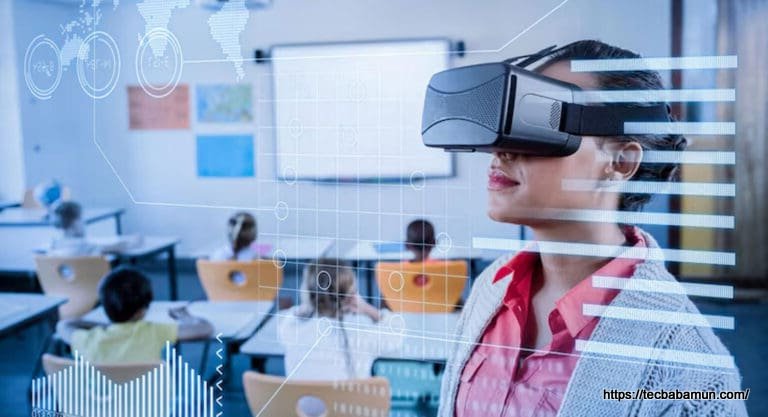
Online education has been a major boost in the field of virtual reality and augmented reality education. Thanks to VR and AR, students can have an immersive learning experience without having to move much.
If you want to learn about space objects by playing a 3D space video on your VR headgear, you can float in space while a background voice continues to describe the Milky Way in detail to you.
Similarly, real-time broadcasts of important surgeries help medical students learn through a more immersive experience.
Automation
A huge part of the world we live in is driven by automation. Business and economic sectors offer automation to deliver experiences faster while increasing engagement.
By 2025, the education sector will definitely benefit from the features of automation.
With automation, students will have a better chance of automatically receiving lectures at specific times. Lectures can be scheduled digitally.
Not to mention, through automation, a better way to adopt the use of artificial intelligence is helpful.
Resources
Finally, there is the issue of access. The same resources mean digital education is not accessible to everyone.
This applies to schools that may not have sufficient funding for the necessary latest technology. However, it also applies to students who do not have devices or reliable internet at home.
For the latter, schools should do their best to support students and provide them with the necessary resources if e-learning is an important part of the curriculum. In the UK, two things are actually done together, providing premium funding for disadvantaged students.
This funding can be used to provide targeted educational support and teaching assistance in topics such as VR latest technology.
Conclusion
Finally, advances in educational latest technology – from adaptive learning to proctoring in education – are transforming classrooms and learning experiences, making them more accessible, personalized, and engaging.
Proctor Edu supports this evolution by ensuring safe, reliable assessments in online and distance learning environments, upholding the integrity that all of these technological tools provide to make them successful.